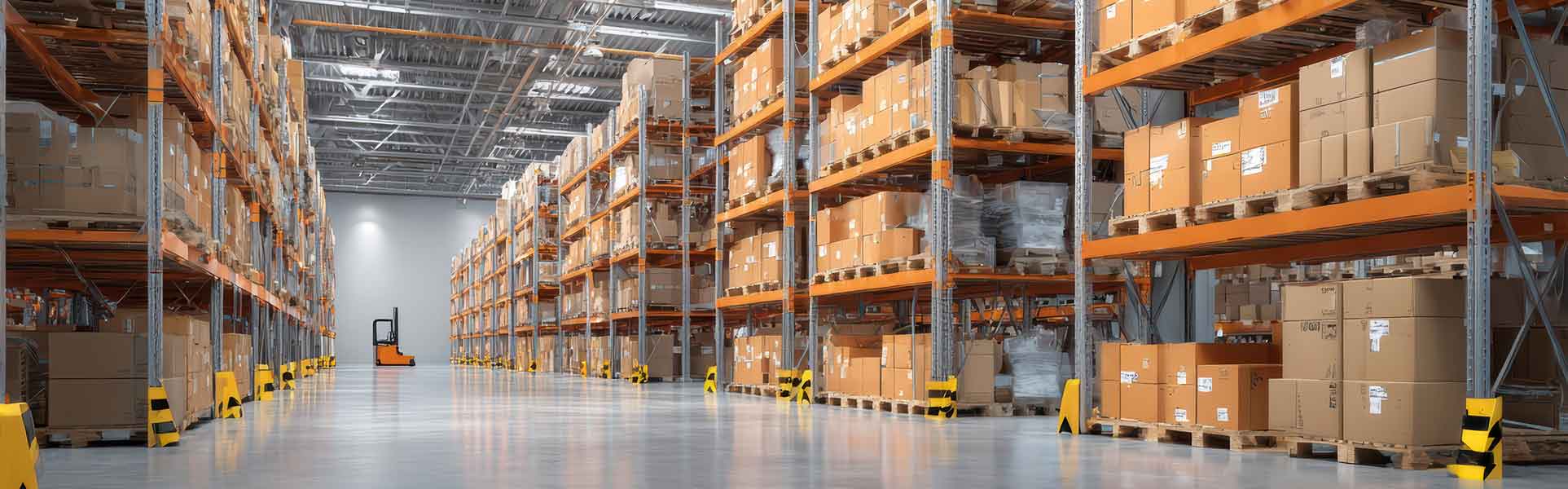
.webp "LTL Freight Shipping: Complete Guide to Less-Than-Truckload Logistics image https://site-dev.igtfreight.com")
.jpg "LTL Freight Shipping: Complete Guide to Less-Than-Truckload Logistics image https://site-dev.igtfreight.com")
LTL Freight Shipping: Complete Guide to Less-Than-Truckload Logistics
In logistics, inefficiency hides in unused capacity. A half-empty trailer moving 800 miles is not just wasted space; it’s margin erosion. For companies that ship consistently but not in full-trailer volumes, the question isn’t whether to use LTL. The real question is whether they understand how to use it strategically.
Less-than-truckload shipping isn’t simply a budget alternative to full truckload. It is a shared network model designed to convert fragmented freight volume into structured, scalable distribution.
For companies managing regional replenishment, mid-volume distribution, or multi-location supply chains, LTL is not a fallback option. It’s infrastructure.
What Is LTL Freight - From a Business Perspective
Technically, LTL applies to shipments between 150 and 15,000 pounds. Strategically, it applies to freight that does not justify exclusive trailer utilization.
Instead of dedicating one trailer to one shipment, LTL carriers aggregate freight from multiple shippers moving toward overlapping geographic corridors. Each business pays for the linear footage or weight class it occupies. That pooling model spreads fixed transportation costs across several stakeholders.
The result is lower per-shipment spend, provided that classification, packaging, and booking data are accurate.
A Capacity Economics Model or Why LTL Exists
Transportation assets are expensive. Drivers, tractors, trailers, fuel, maintenance - those costs do not decline proportionally when trailer utilization drops. A 40% full trailer costs nearly the same to run as a 90% full trailer.
LTL exists to solve that imbalance. It transforms fragmented demand into structured volume by consolidating freight inside a controlled terminal network. In other words, it monetizes partial capacity.
For shippers, that means access to national coverage without committing to truckload-scale volume. For carriers, it means higher yield per mile through density. LTL is a capacity discipline model.
How LTL Shipping Actually Works And Why It Matters
LTL is not direct transportation. It is network transportation. Freight moves through local pickup, terminal sorting, regional hub consolidation, linehaul routing, and final-mile distribution. Your shipment may be touched multiple times before delivery.
That sounds inefficient until you understand the logic. Each transfer point increases network density and route optimization. Consolidation at terminals allows carriers to maximize trailer utilization along predictable freight corridors.
The tradeoff is time and handling exposure. Which means execution quality matters.
The Hub-and-Spoke Network - Operational Leverage at Scale
The hub-and-spoke model is the backbone of LTL economics. Local terminals collect freight from defined service areas. Regional hubs aggregate and redirect shipments based on destination demand. Linehaul routes operate between high-volume corridors. This system creates structured freight flow rather than ad hoc routing.
For decision-makers, the takeaway is clear: LTL performance depends heavily on carrier network density. A carrier with weak regional volume will produce longer transit times and higher rehandling risk. Network strength is not a marketing metric. It is a structural advantage.
LTL vs Full Truckload - Choosing Based on Capital Discipline
Full truckload offers simplicity: one trailer, one shipment, minimal transfers. But simplicity carries cost when volume does not justify exclusivity.
FTL makes sense when freight fills most of a trailer or when delivery speed directly affects revenue capture. LTL makes sense when shipment cadence is steady, volume is moderate, and cost predictability outweighs transit speed.
The mistake many companies make is choosing based on habit rather than shipment profile. Transportation mode should match demand density.
Freight Classification - Where Strategy Meets Cost Control
Freight class is not a technicality. It is a pricing lever. There are 18 freight classes, determined by density, handling complexity, stowability, and liability exposure.
Dense, stable freight earns lower classes. Irregular or fragile freight increases cost per hundredweight.
Under-declared dimensions or incorrect class entries lead to reclassification and billing corrections. And corrections erode cost forecasts.
Executive takeaway - accurate freight data is a financial control measure. If your internal teams do not measure and declare shipments correctly, you are outsourcing margin to audit adjustments.
Documentation - Risk Management in a Shared Network
In LTL, the Bill of Lading is more than paperwork. It is the identity and contractual record of the shipment across multiple terminals and transfers. In a shared environment, ambiguity creates friction.
Incorrect consignee details, missing accessorial flags, or incomplete freight descriptions increase delay risk and fee exposure. Precision reduces downstream variability.
What Drives LTL Pricing at Scale
LTL pricing isn’t random. It follows a logic, even if it doesn’t always feel that way when invoices arrive.
At the center of that logic is freight class. Class reflects density, handling complexity, stowability, and liability risk. Dense, stable freight usually costs less to move. Light, fragile, or irregular freight costs more because it takes up space inefficiently or requires extra care. That difference directly affects your rate.
Weight and dimensions matter just as much. In LTL, you’re buying space inside a shared trailer. If your shipment occupies more cubic footage than expected, or if the weight doesn’t match what was declared, pricing adjusts. And those adjustments rarely favor the shipper.
Distance also plays a role, but not in isolation. Lane density matters. Some routes move heavy volume and are highly competitive. Others are thinner corridors with fewer consolidated shipments. That affects cost. Two shipments of identical size can price differently depending on where they’re going and how strong that lane is for the carrier.
Then there are accessorial services. Liftgates, residential delivery, limited-access locations, scheduled appointments - these aren’t minor add-ons. They change how the shipment is handled and routed. Each one adds complexity, and complexity adds cost.
Fuel surcharges fluctuate with the market. Network capacity shifts with demand cycles. Seasonal spikes, regional imbalances, and equipment availability all influence base rates in ways that aren’t always visible on the surface.
But here’s the part that matters most from a leadership perspective: the variables you control are internal.
Accurate freight data reduces reclassification. Standardized packaging reduces damage and handling issues. Predictable shipping cadence improves rate stability and planning.
Companies that treat freight preparation as a financial discipline, not an administrative task, see less volatility in their transportation spend. LTL pricing rewards precision.
Common Challenges - And Why They’re Manageable
Transit time is longer than direct truckload because of terminal transfers. Handling frequency increases exposure to packaging weaknesses. Carrier quality varies by network strength and claims management processes.
But these risks are manageable through selection, preparation, and data accuracy.
LTL does not punish businesses for scale. It punishes them for imprecision.
LTL in Modern Supply Chain Design
LTL is not just a shipping method. It is a distribution layer. Manufacturers use it to supply regional warehouses without overcommitting capital to inventory stockpiling.
Retailers rely on it for store replenishment cycles. E-commerce businesses use it to rebalance inventory between fulfillment nodes.
In multimodal supply chains, LTL often acts as the domestic distribution bridge after ocean, rail, or air freight. In short, LTL connects strategic inventory positioning with operational execution.
Preparing an LTL Shipment - Execution Discipline
Preparation is not administrative work. It is cost management. Weigh accurately. Measure precisely. Confirm freight class. Palletize securely. Document clearly. Identify accessorial requirements before booking. Every detail affects predictability.
LTL rewards companies that treat shipping data as operational infrastructure, not an afterthought.
The Takeaways
LTL freight shipping is not about saving money by sharing a trailer. It is about aligning transportation mode with shipment density and capital efficiency.
When used strategically, LTL supports scalable distribution, cost discipline, and flexible inventory movement across regions. But the system requires accuracy. Classification errors, incomplete documentation, and weak packaging undermine its economics.
For organizations moving steady, moderate-volume freight, LTL is not secondary to truckload. It is a core component of a mature logistics strategy.
FAQ
LTL is a shared freight transportation model designed for shipments that do not require a full trailer. Multiple shipments move through a consolidated network of terminals before final delivery.
Freight class determines cost based on density and risk factors. Misclassification leads to reweigh and reclass fees.
Yes. LTL supports controlled expansion by allowing businesses to scale distribution without full-trailer commitments.
Inaccurate shipment data. Most cost overruns and delays stem from incorrect weight, dimensions, or incomplete documentation.
Latest insights and useful articles
Stay informed with the latest trends and educational resources in the freight industry. Our experts share helpful tips on optimizing supply chains, navigating complex shipping regulations, and choosing the most efficient transport modes for your business. Whether you are looking to reduce costs or improve delivery times, our articles provide the professional guidance you need to keep your logistics moving forward with confidence and clarity
Logistics
Warehouse Management System (WMS): Features, Benefits & Best Practices
A warehouse management system tracks every item, guides putaway and picking, and cuts errors. See core WMS features, benefits, and best practices.

Logistics
3PL Logistics Made Simple: Meaning, Benefits & Real-World Examples
Learn what 3PL logistics means, how providers handle warehousing, fulfillment and returns, plus the main benefits, types and real-world examples.

.webp "Ready to simplify your freight shipping? https://site-dev.igtfreight.com")
Ready to simplify your freight shipping?
Move your freight with confidence. Quick quotes, reliable capacity, and a team that actually answers when you call. Get started today with zero pressure and all the answers you need.
Get My Free Quote